Invisalign
Suited to responsible teenagers and to adults
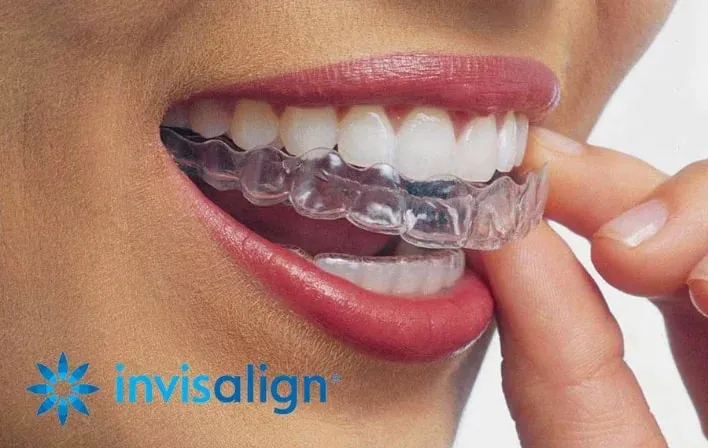
The aligner comes out for meals and for brushing, then goes straight back in: it is the daily wear time that determines the result. Being clear, it goes unnoticed.

✦ Our leading speciality
Orthodontics by Becker
Our core speciality since 1981. Invisalign clear aligners, ceramic or metal fixed braces, the lingual technique and interceptive orthodontics, for children, teenagers and adults, with no upper age limit, across our five Luxembourg clinics.
Our approach
Initial assessment
A full examination, 3D digital scans and imaging if needed.
Treatment plan
A personalised plan, with different alternatives suited to each patient, presented and costed before anything begins.
Regular follow-up
Closely spaced check-ups to make adjustments and stay on course.
Retention
Lasting stabilisation of the result achieved.

Every situation has its answer. Here are the six approaches we offer in Luxembourg, from the most discreet to the most comprehensive.
The right time to treat depends on growth, not on age alone. The initial assessment is what determines it.
Day to day
Orthodontic treatment succeeds on two conditions: the team’s work, and yours. The duration given at the initial assessment assumes appointments kept, an appliance worn as prescribed and a suitable diet. Here is what changes in practice, day to day.
Tell us what is going on
Tell us what is bothering you, what has broken, what you have not been able to wear. Treatment is carried out with you, not despite you.
Good hygiene
Careful brushing after every meal, above and below the wire, completed with an interdental brush.
Wear your appliance
Clear aligners, elastics, removable appliance: the wear time prescribed directly determines the result and how long it takes.
Keep to your appointments
A missed session puts back the next adjustment and adds several weeks to the treatment.
Watch what you eat
Avoid foods that pull brackets off or break the appliance, and cut things into pieces rather than biting into them.
Sticky or soft foods
They pull brackets off. Eaten regularly, they reduce the effect of each adjustment and lengthen the treatment.
sticky sweetschewing gumtoffees
Foods that are too hard
They break the appliance. Every breakage means a repair session that does not move the treatment forward.
peanutsnutsvery hard sweets
Bad habits
Do not bite straight into an apple or a sandwich: cut them into pieces. Do not bite your nails or chew on a pen.
bitten nailschewed penbiting straight in
A wire sticking out, a bracket that has come off, a broken elastic: call us and a repair appointment will be arranged for you. In the meantime, orthodontic wax placed on the part that is rubbing is enough to relieve it. We give you some when the appliance is fitted.
It hurts, it is bleeding, it is swelling: call us straight away and we will see you quickly. Never try to cut a wire or re-attach a bracket yourself.
The aim is not only aesthetic. Aligning the teeth improves chewing, makes brushing and access between the teeth easier, and helps preserve the health of the teeth and gums over the long term. A well-aligned dentition is easier to look after and wears more evenly. The aesthetic benefit is real, but it comes on top of a functional one.
Yes. Teeth that overlap, or that meet badly, are harder to clean: the brush and the floss do not reach certain areas. That encourages tooth decay and inflammation of the gums. The way such teeth meet also causes abnormal wear of the enamel and, in some cases, muscle or joint pain in the jaw.
Yes, and it is common. The orthodontist may spot a problem while judging that the right moment to act has not yet come: they then propose simple monitoring, with widely spaced check-ups, until the most favourable window. Treating too early lengthens the treatment needlessly; treating too late can make it more complicated.
In most cases, yes. Work, sport, singing, playing a wind instrument, social life: the treatment does not interrupt them. A short period of adjustment is common in the first few days, however, particularly for wind instruments and for speech. Tell us what you do at the assessment stage: it may guide the choice of technique.
A first assessment is recommended at around 7, even where nothing appears to be wrong. At that age the first permanent molars and incisors are in place and make it possible to spot a jaw discrepancy before it becomes established. An earlier consultation is justified when the dentist, the school doctor or the parents notice something unusual: a problem with jaw growth sometimes comes before any visible misalignment.
The first appointment is above all about listening: what brings you here, what bothers you, what you expect from treatment. A clinical examination of the teeth, the gums and the jaws follows, together with the way the teeth meet. The orthodontist then decides whether further examinations are needed to reach a full diagnosis.
Depending on the situation: X-rays (a panoramic X-ray and a lateral cephalogram at the very least, sometimes a Cone Beam 3D scan), intraoral and extraoral photographs, and impressions or a 3D digital scan. These examinations record the starting point: they are used to draw up the treatment plan, and then as the reference against which its result is measured. They are carried out at Luxembourg-Merl.
Once the assessment has been analysed, the orthodontist sets out the diagnosis, the goals, the technique envisaged and an estimate of how long it will take. The plan is specific to each patient: it depends on age, on the position of the teeth and jaws, on the condition of the gums, but also on your aesthetic expectations and your personal constraints. It is explained to you beforehand, not applied without discussion.
Early treatment may be proposed in childhood, in order to work with jaw growth while it is still active. This is precisely what the assessment at 7 is there to detect. In teenagers, treatment acts on both the jaws and the permanent teeth. In adults, most misalignments can also be corrected: there is no age limit.
Yes. Most misaligned teeth can be corrected in adulthood, mainly with clear aligners or the lingual technique. In some cases involving a significant jaw discrepancy, surgery may however be needed alongside the orthodontics. The initial assessment establishes whether your situation can be dealt with by orthodontic treatment alone.
The choice is made on the clinical case, not on preference. Clear aligners cover most mild to moderate corrections and come out for eating and brushing. Fixed braces, metal or ceramic, remain the reference for significant rotations and complex cases. The lingual technique, bonded behind the teeth, stays invisible from the front. The initial assessment decides.
Three conditions must be met: the written treatment estimate signed, the terms and conditions signed, and, for children covered by the health insurance fund, the fund’s approval received. In addition, any tooth decay must be treated before the appliance is fitted. No treatment starts without these documents having been discussed with you.
Yes, in every case. All tooth decay must be treated by your general dentist before orthodontic treatment begins. A decayed tooth under an appliance becomes far harder to treat, and the appliance sometimes has to be removed to reach it. That is why we ask for an up-to-date dental check-up before fitting.
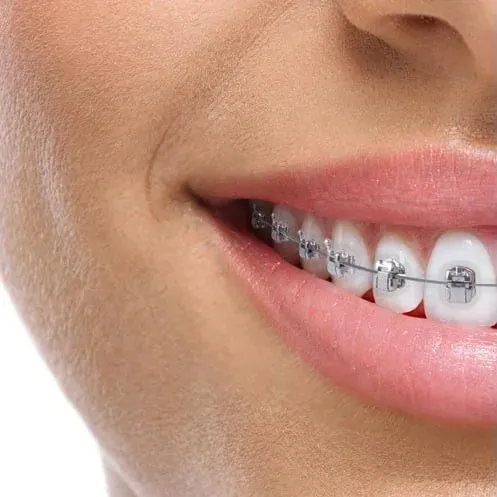
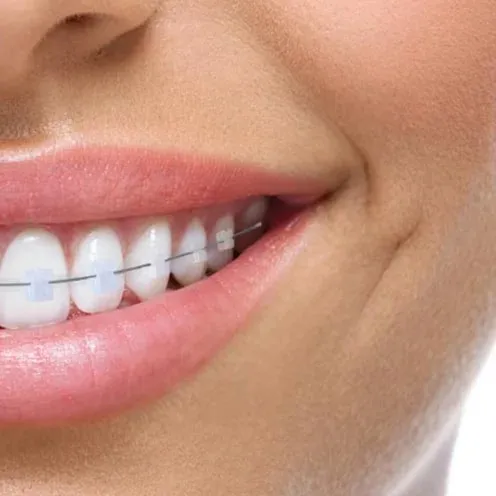
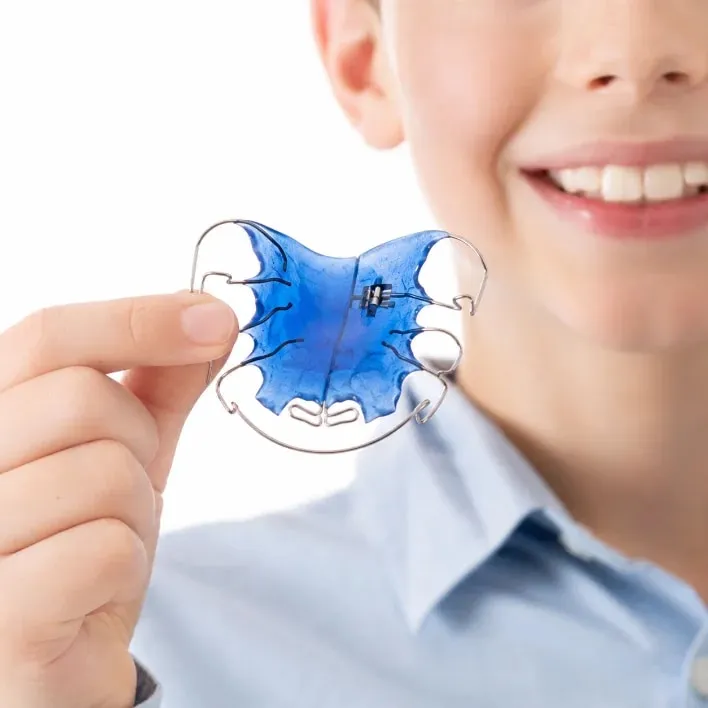
Five families, according to the clinical case: the conventional fixed appliance with metal brackets; ceramic brackets, tooth-coloured and more discreet; the lingual appliance, bonded behind the teeth; removable clear aligners; and the removable appliance, used in particular in children having interceptive treatment. Several may be combined or follow one another within the same treatment.
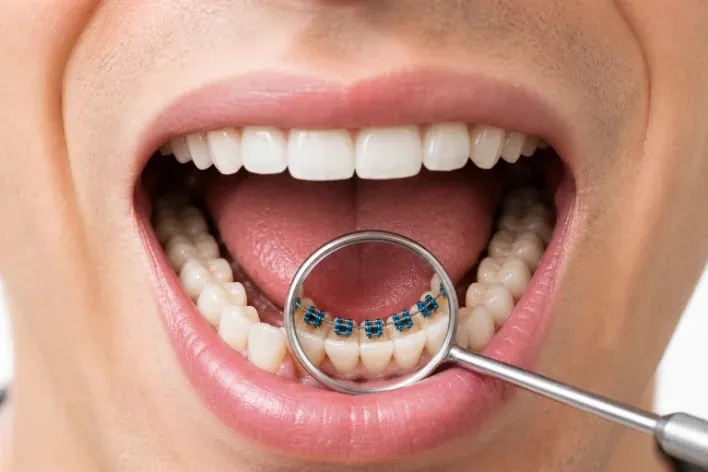
The surface of the tooth it is bonded to. The conventional appliance is fitted on the outer surface, visible when you smile. The lingual appliance is fixed on the inner surface, on the tongue side: it stays invisible from outside, even close up. In return, it calls for a more noticeable period of adjustment for speech and for brushing.
No, not in every case. The choice depends first on what has to be corrected: certain rotations and certain large movements are treated better, or only, with fixed brackets. It then depends on what is technically feasible in your case, and on the level of cooperation required: clear aligners only work if they are worn for the number of hours prescribed.
Some difficulty with speech is possible in the first few days, especially with a lingual appliance or an aligner, as the tongue has to get used to a new volume. It usually eases gradually over one to two weeks. Reading aloud for a few minutes a day speeds up the adjustment noticeably. If you sing or play a wind instrument, tell us before the technique is chosen.
Treatment generally has two phases. The active phase, during which the appliance moves the teeth, with regular check-ups to adjust the forces applied. Then the retention phase, which holds the result achieved while the bone consolidates around the teeth. Both phases are part of the treatment: one without the other does not last.
On average 12 to 24 months for the active phase, followed by two years of retention. The length depends on the complexity of the case, on the patient’s growth and on how closely the orthodontist’s instructions are followed. Mild cases can be corrected in 6 to 10 months; complex cases treated with the lingual technique take longer. The initial assessment gives you an estimate.
The frequency depends on the type of treatment, on the appliance used and on your orthodontist’s recommendations: it is set case by case and given to you at the start of treatment. These appointments are not simple checks: it is at these sessions that the appliance is adjusted. A missed session therefore puts back the next adjustment and lengthens the treatment.
Fitting is not painful and needs no anaesthetic. Temporary sensitivity of the teeth or of the soft tissues may appear during the first few days after fitting and after each adjustment: it is the sign that the teeth are moving. It usually fades gradually, and an ordinary painkiller is enough to relieve it. Do tell us about any pain that lasts abnormally long.
Yes. X-ray checks may be taken during treatment in order to follow its progress and to verify the actual movement of the teeth and roots, which clinical examination alone cannot show. These examinations are carried out at the Cabinet d’Imagerie Dentaire, at Luxembourg-Merl, on referral from your orthodontist.
By comparing, at each check-up, the actual position of the teeth and jaws against the goals set at the start of treatment, not against the previous session. Photographs, digital scans and, where necessary, X-rays document that progress. When the gap widens, the plan is adjusted: that is precisely what these appointments are for, beyond adjusting the appliance.
Debonding has several stages: removing the appliance, cleaning off the residual adhesive, then polishing and buffing the teeth to restore smooth enamel. A second appointment is sometimes needed to finish the polishing. Retention is put in place straight afterwards: the result is not stable until it is fitted.
Because an appliance makes brushing considerably harder, and because poor hygiene during treatment leaves permanent damage: irreversible marks on the enamel, tooth decay, inflammation or gum recession. Allow at least two minutes after every meal, above and then below the wire, bracket by bracket, completed with an interdental brush. It is the main avoidable risk of the treatment.
Yes. A check-up with your general dentist remains recommended every six months throughout the orthodontic treatment. We follow the movement of the teeth; your dentist follows their state of health. The two are complementary and neither replaces the other. Decay caught early saves having to remove the appliance to treat it.
Yes, whenever the situation calls for it. Orthodontic follow-up is coordinated with your general dentist and, where relevant, with a periodontist, an oral and maxillofacial surgeon or a practitioner specialising in implants. A clinical report is sent to your regular dentist, and any imaging carried out here is sent to them directly. You do not have to pass the documents around yourself.
Yes, two families cause problems. Sticky or soft foods (chewing gum, toffees, nougat, sweets, sugary drinks) pull brackets off, reduce the effect of each adjustment and encourage tooth decay. Foods that are too hard (peanuts, nuts, very hard sweets) break the appliance. Otherwise, cut things into pieces rather than biting straight into an apple or a sandwich.
Thumb sucking, nail biting, tongue thrust against the teeth and mouth breathing can disrupt the treatment or encourage a relapse once it has finished. To these can be added chewing on a pen or an object, which pulls brackets off. Do tell us about these habits: some can be corrected, and that is part of the treatment.
Contact the clinic promptly. The repair should ideally happen within ten days: beyond that, a damaged appliance causes uncontrolled tooth movement and lengthens the overall treatment. If there is no pain, a repair appointment is arranged. If there is pain, bleeding or swelling, we will see you quickly. Never cut a wire yourself.
The treatment slows down, loses effectiveness and takes longer. Clear aligners and elastics only work during the wear time prescribed: a few hours missed each day are enough to put the whole treatment plan back. Where cooperation is insufficient, or where there is a risk to your health, the orthodontist may decide to stop the treatment.
Tell the clinic in advance. A long stay abroad, a temporary move or a period of immobility are all easily managed provided they are anticipated: we adapt the follow-up and, if necessary, the appliance, before you leave. An unannounced interruption, on the other hand, harms the treatment and may mean going back over certain stages.
It is the phase that follows removal of the appliance. It stabilises the teeth in their new position while the bone consolidates around them. Without retention, teeth have a natural tendency to drift back towards their original position, whatever the age and whatever the technique used. Retention is not an optional extra: it is what makes the result last.
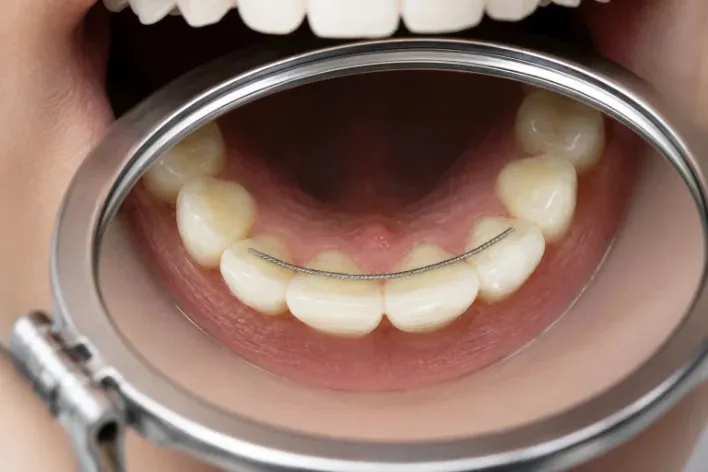
Two forms, sometimes combined. A bonded retainer behind the teeth, invisible and permanent, which asks nothing of you day to day. Or a removable retainer, worn at night as prescribed. The choice depends on the initial clinical situation and on the risk of relapse in your particular case; it is explained to you when the appliance is removed.
Two years, with six-monthly check-ups. That is how long the bone needs to reorganise around the teeth in their new position. The first months matter most: that is when the risk of relapse is highest. After those two years, your orthodontist will tell you whether continuing longer is advisable in your case.
Yes. Replacement of the retainer is guaranteed for 24 months, subject to the six-monthly check-up appointments being kept. Those check-ups are not a formality: they make it possible to confirm that the wire is intact and properly bonded, and to repair it before an unnoticed debond has let the teeth move.
Contact the clinic promptly so that a check-up and, if necessary, a repair can be arranged. A wire that has come loose, even on a single tooth, leaves that tooth free to move, and the movement can be visible within a few weeks. Do not wait for the next six-monthly check-up: the sooner it is dealt with, the simpler it is.
The Caisse nationale de santé (CNS, Luxembourg’s national health fund) covers part of orthodontic treatment for children, subject to conditions and to prior approval. Treatment for adults is generally not reimbursed by the CNS; cover may still be available through private or supplementary insurance, depending on the terms of your policy. The current rules are set out on cns.public.lu.
Yes, in every case. The written treatment estimate is given to you at the end of the initial assessment, before any appliance is fitted, and signing it is a condition of starting treatment. It sets out the technique chosen, the estimated duration, the total amount and any part that may be covered. No treatment begins without this document having been discussed with you.
More questions about reimbursement, languages spoken or access? See the full FAQ.
Eight practitioners working in orthodontics, across the five clinics. Each profile gives their training, the clinics where they see patients and their online booking calendar.
See the practitionersOrthodontics is offered at our five Luxembourg clinics: Hôpital Kirchberg (HRS), Luxembourg-Merl, Dudelange, Ettelbruck and Wiltz, as well as in Trier.
View our clinics